

Finding the Best Way Forward
Most of us like to believe we act with consideration for others, but in important situations, it isn’t always clear what the best outcome truly is. Rather than focusing on what we want to happen, this reflection explores how learning to see a situation clearly — allowing time, perspective, and certainty to emerge — leads to choices that feel right for everyone involved.
If you observe very young children going through their day, it's easy to see that in every interaction they have, there is one thing on their minds: themselves. Everything revolves around them, and they haven't yet developed the ability to see things from another person's perspective. As adults, we like to believe that we are different.
We have empathy and consider others, offering help or making compromises. But are we genuinely thinking about others, or are we simply better at concealing our own agendas and manipulating situations to achieve the outcomes we truly desire? It doesn't really matter whether we can honestly assess our actions in each situation and determine how selfless they are.
Being selfless all the time is not the ultimate goal, just as constantly obtaining what we want is not the goal either. Ultimately, we want the best outcome to occur, which is challenging because we often fail to recognize what that truly is. However, in significant situations in our lives, it is better for us and everyone involved if we learn how to navigate them in order to achieve the best results.
So, how do we accomplish that? Well, every important situation is unique, and our actions will vary each time we encounter one. Therefore, the real answer lies not in what we should do, but rather in the way we need to be.
First and foremost, we must be aware of when an important situation is commencing. That means we need to recognize as quickly as possible that it has started. Once we find ourselves in the situation, there are several paths we can take, and we must be cognizant of the available options, acknowledging that we don't know which one is best yet.
It's important to remember that the best option might align with what we want to happen, or equally, with what we don't want to happen. We must be willing to accept outcomes that may not align with our immediate desires because they are in the best interest of the bigger picture. If other people are involved, we need to consider their perspectives and not dismiss anything prematurely.
Additionally, we need to recognize that one of the tools at our disposal is time. Sometimes, things need to be left and temporarily set aside. There may come a point where the way forward is unclear.
If possible, during such moments, rather than forcing a premature conclusion that could be incorrect, it is better to step away and revisit the situation later. So, how do we recognize the best course of action? Well, when we weigh the options, the best way forward is the one that leaves us with no doubt that it is indeed the best path.
By "knowing" the best way, I mean having a deep sense of certainty. Knowing is not the same as merely thinking. Knowing is a feeling.
We don't need to debate or convince ourselves of it, but we must be receptive to it. When we observe other people's lives, it is often easy to see what they should do in certain situations. It can be surprising when they choose differently.
However, we don't need to be like that. We don't have to choose the way we think is best for us. We can choose the way we know is the best because we understand that our decision is not driven by selfishness, but rather by good intentions.
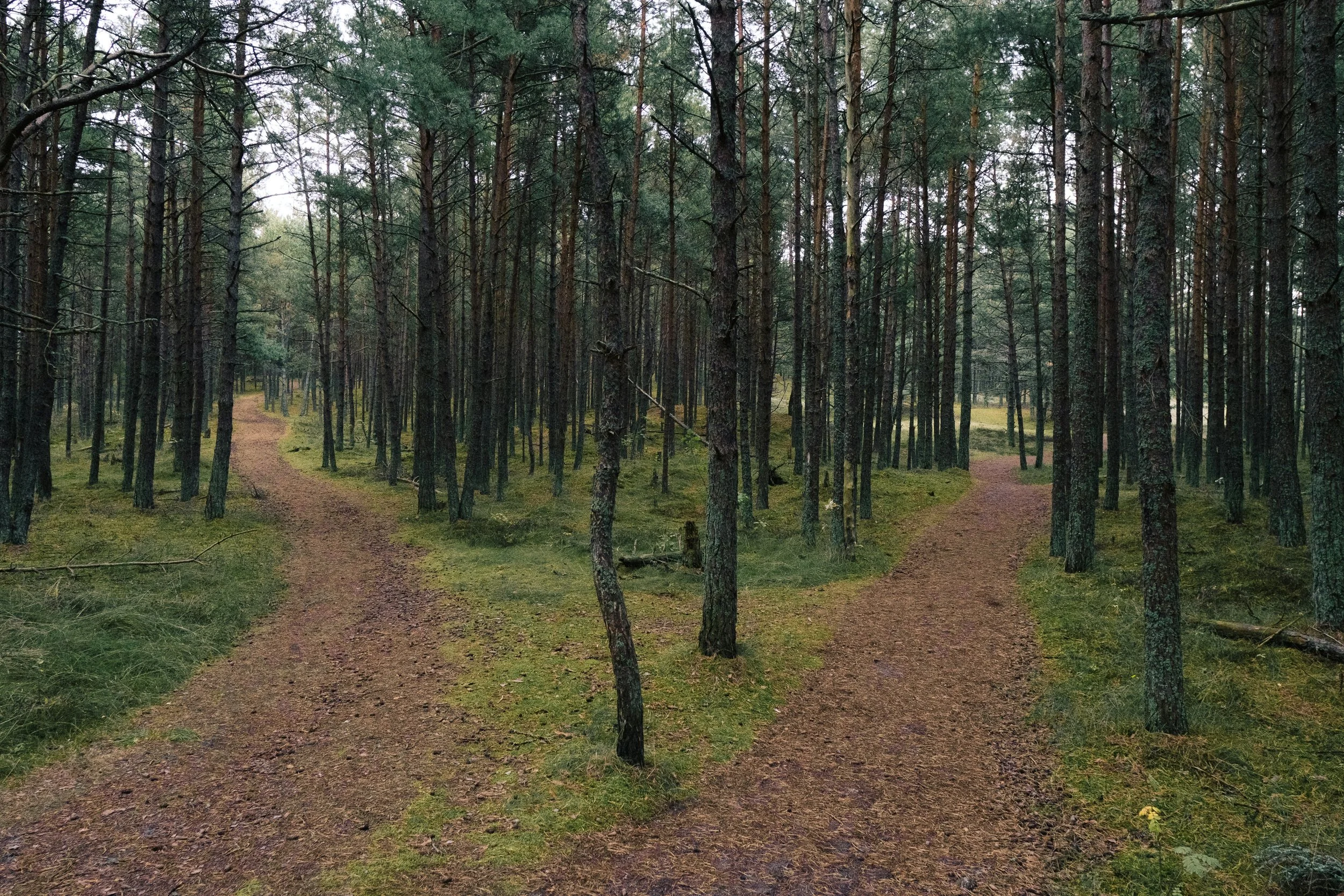
A Simple Test for Knowing You’re on the Right Path
Insights into emotional balance and clarity and how it can shape your perspective. Discover how these ideas can support your emotional balance and clarity in everyday life.
Every day, from when I wake up to when I go to bed, my life is a series of choices. And each choice for me is important. What to wear, what to eat, when to eat, how much to eat, what I should say to someone, what to do in a work situation, how to spend my free time.
I make choices all day long, and I never want to make the wrong choice or make a poor choice or fail to make a choice. I want to make the right choice every time. Each choice is important because it affects me.
It could affect my body condition, my relationships, or my future. Likewise, if I do things in the wrong order or not in the best order, then it affects my life. With so many choices all day every day, it’s difficult or impossible to make the right choice and do the right thing every time.
And although I can never really know whether I’m doing the right thing until I do it, there are clues that I need to recognize to see that it’s the right thing. Recognizing the clues and what is a clue is the key for me. Doing the right thing sometimes, of course, means not doing what I want to do and doing something I don’t particularly want to do because it’s the right thing to do.
I can’t be selfish in my choices, but that doesn’t mean the result can’t still be good for me or that I can’t sometimes do the thing I want to do; it’s just that it needs to truly be the best thing to do. And that means that I need to be sensitive to which way things are going. People’s reactions, especially people close to me, are a big clue as to whether I’m doing the right thing or not.
It sometimes happens that someone says that I should do something, and when they say it, it’s like a straight punch that hits me. The truth of it really rings a bell, and I know that it’s the right thing. But just as important as choosing the right thing to do is recognizing when I should stop doing something.
If people have an abnormally strong reaction, much stronger than the situation warrants, then my alarm bells go off, and I know it’s a clue to stop doing what I’m doing. Or if something seemingly simple becomes impossible to do, then I know it’s a clue to give up. I sometimes feel as if I’m being blocked, and this can be mentally too.
I get uncharacteristically confused, and in the end, have to give up what I’m doing. This is a clue to stop. These clues are everywhere, and at first, I didn’t recognize them as clues, or I couldn’t interpret their meaning.
And that was okay because I was learning. But as I got better at picking up the clues, I could look back and see where I had gone wrong, and this helped me to get it right the next time. And there is always a next time.
My life isn’t that different every day, and situations repeat themselves all the time. So I can always find the same clues again and then make the right choices. Each choice is very important to me because it changes my life.